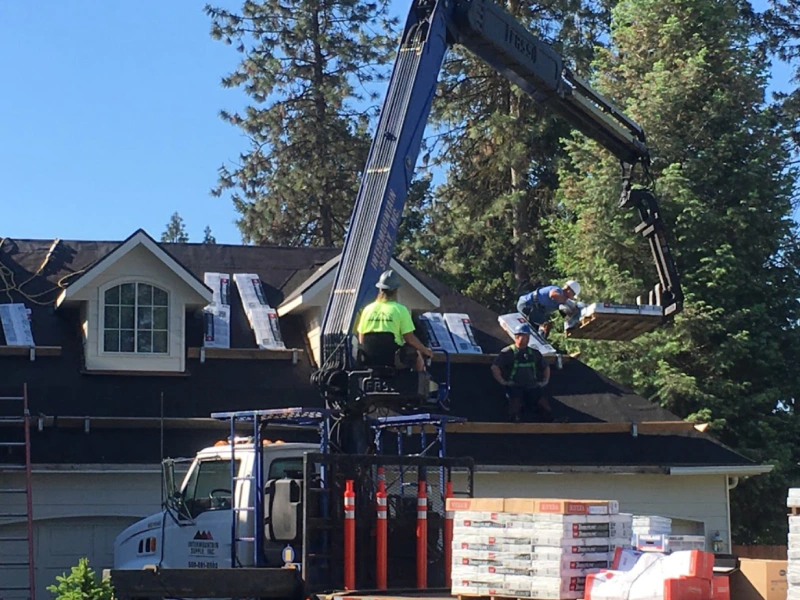
Why a Few Hours Matter After Roof Damage
A breach in your roof is one of the few home problems that gets dramatically worse by the hour. Once water finds a path through damaged shingles, lifted flashing, or a hole punched by a falling limb, it spreads sideways across the decking, soaks insulation, runs down wall cavities, and drips into ceilings and electrical fixtures. What starts as a small leak can become a five-figure interior repair after a single wet night.
In the Inland Northwest, the weather rarely gives you a long, dry window to think it over. A windstorm that strips shingles in the afternoon is often followed by rain or wet snow the same evening. That is why emergency roof tarping exists: it is a temporary cover that stops water intrusion immediately so you can schedule a proper, permanent repair without the damage compounding in the meantime.
When You Actually Need a Tarp
Not every missing shingle is an emergency. A tarp makes sense when the roof's water barrier is genuinely compromised and weather is on the way. Common situations we see around Spokane and North Idaho include:
- Wind damage that tears off a section of shingles and exposes the underlayment or bare decking.
- Tree or branch impact from a windstorm, leaving a puncture or crushed area.
- Hail that has fractured shingles enough to let water through, especially on older or already-worn roofs.
- Ice dam or snow-load failures that lift shingles or open seams along eaves and valleys.
- An active interior leak with no obvious cause, where the roof needs to be covered while the source is found.
If you can see daylight through the attic, find wet insulation, or have water staining a ceiling, treat it as urgent. When in doubt, it is far cheaper to tarp a roof that turns out to be fine than to skip it and lose a ceiling.
What a Proper Emergency Tarp Job Looks Like
A real emergency tarp is not a plastic sheet held down with a couple of bricks. Done correctly, it is engineered to shed water and survive Inland Northwest wind until permanent repairs happen. A professional job typically includes:
- A heavy-duty woven poly or reinforced tarp sized to overlap well past the damaged area on all sides.
- Anchoring at the high edge so the top of the tarp runs up and over the ridge or well above the breach, letting water flow down and over the tarp rather than under it.
- Wood furring strips rolled into the tarp edges and screwed down, which spreads the load and keeps the cover from flapping loose in gusts.
- Sealed fasteners and minimal penetrations, placed only where necessary, so the tarp itself does not create new leak points.
The goal is a taut, water-shedding surface that channels runoff off the roof, not a loose cover that traps water and tears apart in the next gust. Poorly installed tarps frequently fail within a storm or two, which is why workmanship matters even on a temporary measure.
Should You Tarp It Yourself?
We understand the instinct to climb up and handle it, especially at night with water coming in. But emergency tarping is one of the riskier DIY jobs a homeowner can attempt. Roofs are slick when wet or frosty, steep-pitch homes are common here, and the damaged area is by definition structurally unreliable. Most serious roofing injuries happen during exactly these conditions.
If you must do something before help arrives, focus on the inside: move belongings, put down buckets and towels, and place a container under active drips. If a ceiling is bulging with trapped water, a small poke with a screwdriver into the lowest point can relieve the weight in a controlled way and prevent a larger collapse. Leave the roof itself to a crew with fall protection, ladders, and the right materials. A botched DIY tarp that blows off at 2 a.m. leaves you worse off than no tarp at all.
Tarping and Your Insurance Claim
Most homeowners policies include a duty to take reasonable steps to prevent further damage after a covered loss, often called mitigation. Emergency tarping is the textbook example, and the cost of a reasonable temporary cover is usually reimbursable as part of the claim. Just as importantly, failing to mitigate can give an adjuster grounds to deny the additional interior damage that resulted.
To protect yourself, document everything before and during the tarp: take dated photos and video of the damage, the interior leaks, and the tarp once installed. Keep any receipts or invoices for the emergency work. Then file your claim promptly and let your roofer and adjuster coordinate on the permanent scope. A contractor experienced with storm claims can document the loss in the way adjusters expect, which often makes the difference in what gets approved.
From Tarp to Permanent Repair
A tarp is a stopgap, not a fix. Depending on the material and the weather, a quality tarp may hold for a few weeks to a couple of months, but UV, wind, and snow steadily degrade it. The clock is running from the moment it goes on, so the next step is scheduling the real work.
Once the weather clears and any insurance scope is settled, the damaged area is opened up so the decking can be inspected for rot or saturation, wet insulation is replaced, and new underlayment and shingles are installed to match. If the storm damage is widespread, or your roof was already near the end of its life, a full roof replacement is often the smarter long-term call than patching. For homes that take repeated weather abuse, some owners use the opportunity to upgrade to metal roofing, which sheds snow and resists wind exceptionally well in our climate.
Why Spokane and North Idaho Homeowners Call DG Contracting
DG Contracting has been a family-owned roofer in Colbert, WA since 2013, serving Spokane, Spokane Valley, Coeur d'Alene, and the surrounding North Idaho communities. We know how fast Inland Northwest weather turns, from summer wind and hail to winter ice dams and heavy snow load, and we tarp roofs so they actually hold until permanent repairs are done.
As a GAF Master Elite contractor, a distinction held by only a small percentage of roofers nationwide, we back our work with a 15-25 year workmanship warranty and the GAF Golden Pledge coverage on qualifying replacements. We are licensed and insured in both Washington and Idaho, our estimates are free, and we are glad to coordinate directly with your insurance adjuster. If your roof is leaking right now, do not wait for it to spread. Request a free estimate or call (509) 209-1894 and we will get you protected.