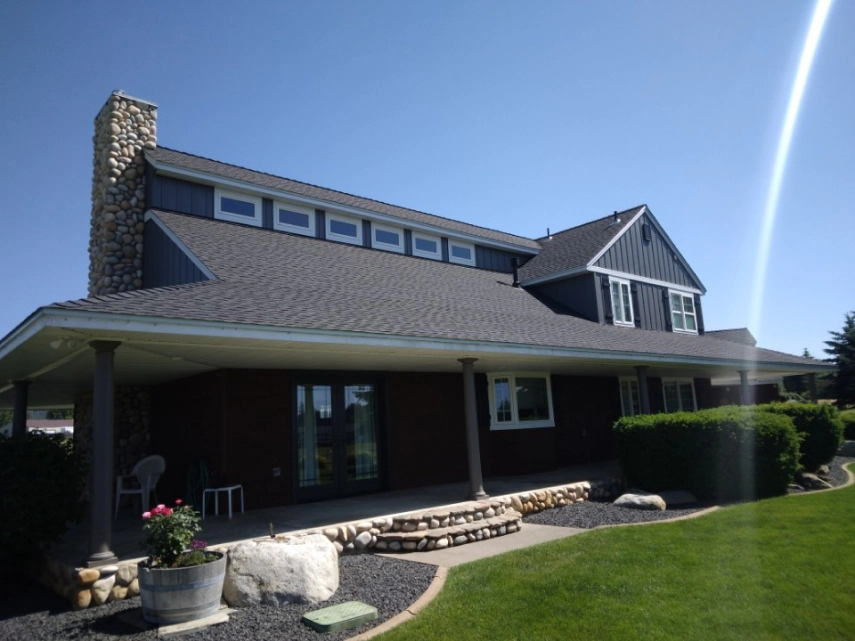
Why Choosing the Right Roofer Matters Here
Your roof is one of the largest and most important investments in your home, and in the Inland Northwest it works harder than most. Between heavy mountain snow loads, repeated freeze-thaw cycles, ice dams along the eaves, and the wind and hail that roll through Spokane and North Idaho, a roof installed even slightly wrong tends to fail fast and fail expensively.
The hard part for homeowners is that roofing is one of the easiest trades to fake. A pickup truck, a ladder, and a magnetic sign are all it takes to look legitimate, especially after a storm. The contractor you choose matters more than the brand of shingle on your house, because even premium materials fail when they are installed poorly. This checklist walks you through how to separate the real, accountable roofing companies from the ones who will be unreachable the day a leak shows up.
Step 1: Verify Licensing, Bonding, and Insurance
This is non-negotiable, and it is the single fastest way to cut your list of candidates in half. In Washington, contractors must register with the Department of Labor & Industries, and you can look up any company's license, bond, and insurance status for free on the L&I website. In Idaho, roofers must hold a current registration with the Idaho Contractors Board. A company serving both sides of the state line, like much of the Spokane and Coeur d'Alene market, should be licensed in both Washington and Idaho.
Confirm three things specifically:
- Active contractor license in the state where your home is located.
- General liability insurance so damage to your property is covered.
- Workers' compensation so you are not liable if a crew member is injured on your roof.
Ask for the certificate of insurance and verify the policy is current, not expired. A reputable contractor will hand this over without hesitation. DG Contracting is fully licensed and insured in both Washington and Idaho, which is a baseline you should expect from anyone you hire.
Step 2: Look at Track Record and Manufacturer Credentials
Longevity tells you a company will likely still be in business when your warranty matters. Roofing has a high turnover of fly-by-night operators, so a contractor with a decade or more of local history is a meaningful signal. DG Contracting has been a family-owned business since 2013, serving Spokane, Spokane Valley, Coeur d'Alene, and North Idaho.
Manufacturer certifications are another strong filter. Shingle manufacturers like GAF only award their top designations to contractors who meet strict standards for licensing, training, and customer satisfaction. GAF's Master Elite status, for example, is held by only a small percentage of roofers nationwide. That credential matters for a practical reason too: only certified installers can offer the manufacturer's strongest warranties, such as the GAF Golden Pledge coverage. Ask any contractor what certifications they carry and whether they can register an enhanced warranty on your job.
Step 3: Read Reviews and Ask for Local References
Online reviews are useful, but read them critically. Look for volume and recency, not just a high star rating. A company with a handful of perfect reviews is harder to trust than one with a large body of consistent feedback over several years. Pay attention to how a company responds to any criticism, since that tells you how they handle problems.
Then go a step further and ask for local references from jobs completed in the last year or two, ideally in your area. Driving past a finished roof or talking to a neighbor who used the contractor gives you information no website can. Ask references whether the crew showed up on time, kept the site clean, finished on schedule, and stood behind the work afterward. Local matters in our climate: a roofer who understands ice dams and snow load in Spokane is worth more than a national crew passing through.
Step 4: Get Detailed, Itemized Estimates
Collect at least two or three written estimates so you have a basis for comparison. A vague one-line quote scribbled on a business card is a red flag. A proper estimate should spell out:
- The full scope of work, including tear-off versus going over existing shingles.
- Specific materials by brand and product line, not just "architectural shingles."
- Underlayment, ice-and-water shield at the eaves and valleys, drip edge, and ventilation details.
- Cleanup, debris haul-off, and magnetic nail sweep.
- Permit responsibility and the projected timeline.
- Warranty terms for both materials and labor.
Itemized estimates let you compare apples to apples. If one bid is dramatically cheaper, it is usually leaving something out, often the underlayment, flashing, or proper ventilation that protects your investment over the long run. When you request a free estimate, expect a written, line-item document you can actually evaluate.
Step 5: Understand the Warranties
Roofing warranties come in two distinct parts, and homeowners often confuse them. The manufacturer warranty covers defects in the materials themselves. The workmanship warranty covers the contractor's installation, and this is where most real-world leaks originate. A great shingle installed with poor flashing will still leak, and the manufacturer warranty will not cover that.
Ask each contractor exactly what their workmanship warranty covers and for how long. Many offer one to a few years; stronger companies back their labor much longer. DG Contracting provides a 15-25 year workmanship warranty and, as a GAF Master Elite contractor, can register the GAF Golden Pledge warranty with 25- and 50-year coverage on qualifying systems. Always get warranty terms in writing, and confirm the warranty is transferable if you sell the home.
Step 6: Watch for Red Flags (Especially After Storms)
After a wind or hail event, out-of-town "storm chasers" flood neighborhoods looking for quick insurance work. Some are legitimate, but many disappear once the check clears. Be cautious of any contractor who:
- Knocks on your door uninvited and pressures you to sign on the spot.
- Asks for a large cash deposit or full payment up front.
- Cannot provide a local address, license number, or proof of insurance.
- Offers to "waive your deductible" (this is insurance fraud).
- Has no written contract or only a verbal estimate.
A normal deposit is reasonable, but the bulk of payment should come on completion. Insist on a written contract before any work begins, and never let anyone start tearing off your roof on a handshake. Choosing an established local company for your roof replacement protects you from the worst of these schemes.
Quick Checklist Before You Sign
Before you commit to any roofing contractor, confirm you can check every box below:
- Licensed in your state (WA and/or ID) with verifiable registration.
- Insured with current liability and workers' comp certificates.
- Established local track record with references you can contact.
- Certified by the shingle manufacturer where applicable.
- Detailed written estimate with itemized materials and scope.
- Clear warranties on both materials and workmanship, in writing.
- A signed contract with payment terms tied to completion.
If a contractor checks all of these, you can hire with confidence. If you would like a no-pressure, written estimate that meets every standard on this list, the team at DG Contracting serves homeowners across Spokane, Spokane Valley, Coeur d'Alene, and North Idaho. Reach out for a free estimate and we will walk you through every detail before you decide.