Why a Real Inspection Is More Than a Glance From the Driveway
Plenty of homeowners think a roof inspection means someone squinting up at the shingles from the ground. A genuine professional inspection is a methodical, top-to-bottom evaluation of your entire roofing system, and it usually takes 45 minutes to well over an hour depending on the size and complexity of the roof.
The reason it matters so much here in the Inland Northwest is climate. Spokane, Spokane Valley, Coeur d'Alene, and the rest of North Idaho put roofs through a brutal annual cycle: heavy snow loads, repeated freeze-thaw swings, ice dams along the eaves, summer UV, and the occasional wind or hail event. Damage rarely announces itself. By the time a stain shows up on your ceiling, water has often been traveling through the structure for months.
A thorough inspection catches the small stuff while it is still cheap to fix. Below is a walkthrough of what a careful roofer actually looks at, inside and out.
The Field of Shingles: Granules, Curling, and Wear
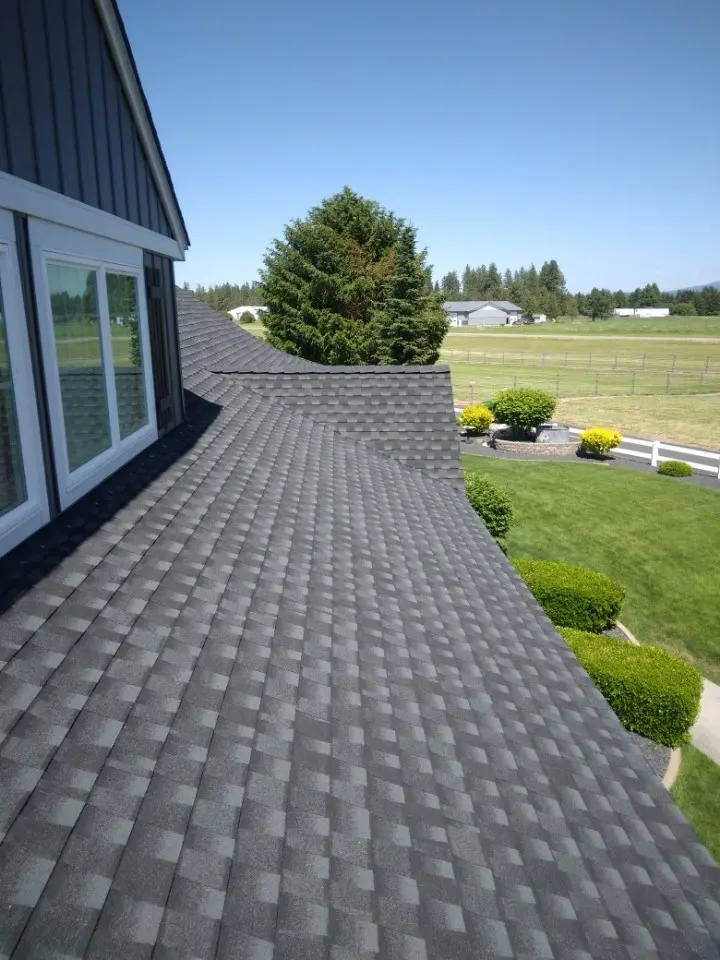
The large open areas of asphalt shingle are the first thing we evaluate, but not the only thing. We look for:
- Granule loss. Those tiny ceramic granules protect the asphalt from UV. When they wash into the gutters or leave bare, shiny spots, the shingle is aging out. We check downspout outlets for granule buildup as a quick tell.
- Curling, cupping, and clawing. Edges that lift or centers that bow signal heat damage, moisture cycling, or simple old age.
- Cracked, torn, or missing shingles. Common after a windstorm, and an open door for water.
- Blistering and bruising. Soft circular marks can indicate hail impact, which often is not visible from the ground.
We also note how brittle the shingles feel. In freezing weather older asphalt becomes fragile, which is one reason we are careful about when and how we walk a roof.
Flashing and Penetrations: Where Most Leaks Actually Start
Here is something that surprises a lot of homeowners: most roof leaks do not start in the open field of shingles. They start at the transitions and penetrations, the spots where the roof plane is interrupted. These get close attention:
- Step and counter flashing where the roof meets walls, chimneys, and dormers.
- Valleys, which channel huge volumes of water and snowmelt and take heavy wear.
- Pipe boots around plumbing vents. The rubber gaskets crack and split in our UV and cold, often within 10 to 15 years.
- Chimney saddles and crickets, which keep snow and water from piling up behind a chimney.
- Skylights, a notorious leak source if the flashing kit was rushed.
We check that flashing is properly integrated and sealed, not just smeared with caulk as a band-aid. Roofing cement slathered over a problem is a classic sign of a past patch job that needs a real repair.
The Eaves, Gutters, and Ice Dam Zone
The lower edge of the roof gets its own focused review because this is ground zero for ice dams. When attic heat melts snow up high and it refreezes at the cold eave, water backs up under the shingles. We look for:
- Ice and water shield presence at the eaves and valleys. Modern code and good practice call for it; many older Spokane and North Idaho homes never got it.
- Drip edge condition and proper installation.
- Gutter pitch, fastening, and debris. Clogged or sagging gutters worsen ice dams and dump water against the fascia and foundation.
- Fascia and soffit rot, which is often the first visible casualty of chronic eave moisture.
If a roof replacement is on the table, this is also why we include a 15-25 year workmanship warranty with a new roof; the edge system and the gutters work together. You can read more about what is involved on our roof replacement page.
Up in the Attic: Ventilation and Hidden Moisture
A complete inspection does not stop at the roof surface. The attic tells the truth about what is happening underneath. We bring a light up and check for:
- Daylight or staining at the underside of the decking, which points to active or past leaks.
- Ventilation balance. Roofs need intake at the soffits and exhaust near the ridge. Poor airflow traps heat and moisture, which cooks shingles from below in summer and feeds ice dams in winter.
- Frost, mold, or damp insulation. Condensation in a poorly ventilated attic can mimic a leak and rot the deck over time.
- Bathroom and kitchen exhaust fans that dump moist air into the attic instead of outside, a shockingly common mistake.
Ventilation problems are easy to miss from the outside, but they are one of the biggest reasons roofs in our region wear out before their time.
The Decking and Structure Underneath
The plywood or OSB decking is the foundation everything else nails into. From the attic we look for sagging between rafters, soft or spongy spots, delamination, and water staining. On the exterior, a roof surface that looks wavy or dished often means the decking below has been compromised by long-term moisture or repeated heavy snow loads.
If decking needs replacement, it is far better to know before a re-roof starts so it can be planned and quoted honestly rather than sprung on you as a surprise mid-project. A trustworthy inspector documents what they find with photos so you can see it yourself.
What You Get at the End and When to Schedule
A good inspection ends with a clear, photo-documented report: what is in good shape, what needs attention now, and what to watch. It should give you an honest read on remaining roof life and realistic options, whether that is a targeted repair, improved ventilation, or planning ahead for a full replacement. For homeowners weighing a longer-term solution, durable systems like metal roofing hold up especially well to our snow loads.
As a rough guide, have your roof professionally inspected every 2 to 3 years, after any major wind or hail storm, before buying or selling a home, and if you ever see interior staining or granules in the gutters. As a GAF Master Elite contractor serving the Spokane and Coeur d'Alene area, DG Contracting offers free, no-pressure estimates. You can request a free estimate any time.