How Coeur d'Alene's setting ages a roof
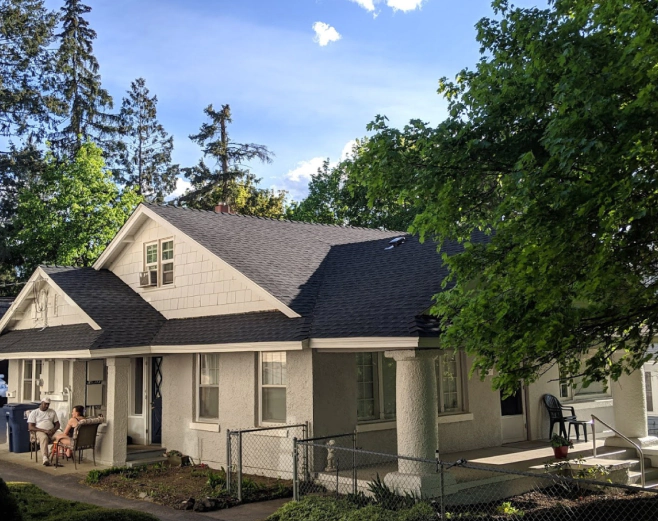
Homes here can sit in two very different microclimates on the same block. South-facing lots above the lake catch intense reflected sunlight off the water, which bakes the asphalt and drives out the oils that keep shingles supple. Heavily treed lots on the north and east sides do the opposite: they hold moisture and shade, so the shingles stay damp, grow moss along the keyways, and lose granules to constant wet-and-dry cycling.
Add the Panhandle's freeze-thaw rhythm, winter snow load, and the wind that funnels off the lake, and shingles turn brittle and start curling well before their rated life is up. You see it as lifted edges, grit collecting in the gutters, and a faded, sandpapery surface, often without a single active leak.
Where rejuvenation comes in
Once you understand what the local climate is doing, the fix is straightforward. A plant-based treatment is applied across the shingle field, where it soaks into the asphalt and replenishes the maltenes, the oils that drained away under UV and moisture stress. As those oils return, the shingle regains pliability, granules stay bonded, and the surface stops shedding.
- Brings back flexibility so cold-weather brittleness and curling slow sharply
- Locks granules in place, protecting the asphalt mat beneath them
- Sheds water more like a newer roof, which matters most on shaded CdA lots
Is your roof a candidate?
Rejuvenation suits roofs that are aging but still structurally sound, typically asphalt shingle roofs in the broad middle of their lifespan. If yours shows fading, light granule loss, and minor curling but no widespread breakage or active leaks, it is likely a strong fit.
We inspect before we recommend anything. If a roof is too far gone, or if there is decking damage or failing flashing underneath, we say so plainly and talk through repair or replacement instead. We will not treat a roof that will not benefit from it.
Tailored to forested and lakefront lots
Treed lots near Tubbs Hill and the wooded subdivisions ringing town need a moss and debris plan alongside the treatment, since organic buildup is what keeps those slopes wet in the first place. Lakefront and bluff-side homes need focus on the sun-cooked southern exposures that age fastest. We match the approach to which side of that line your home falls on.
We hold an Idaho license and work throughout Kootenai County, so the crew on your roof understands how exposure, slope, and tree cover here change what the right plan looks like.
What working with DG looks like
You get a free, honest inspection and a clear recommendation, whether that is rejuvenation, a targeted repair, or simply waiting. As a GAF Master Elite contractor, a credential held by only the top 2 to 3 percent of roofers, we bring the same standards to a rejuvenation visit that we bring to a full reroof.
If your roof turns out to need more than a treatment, we back replacements with a 15-25 year workmanship warranty plus the GAF Golden Pledge, offer flexible financing, and include a 15-25 year workmanship warranty with a replacement. If that proves the better path, our Coeur d'Alene roof replacement page lays out the options.
Timing it for the Panhandle
The best window for rejuvenation runs from late spring through early fall, when the shingle surface is dry and temperatures let the treatment cure properly. Treating before another winter of snow load and freeze-thaw sends the shingles into the cold season flexible rather than brittle.
Booking ahead during the warm months helps, since the calendar fills up. We serve Coeur d'Alene, Hayden, Post Falls, and the surrounding lakes communities.