Why Chewelah business roofs fail early
Chewelah sits in a snow pocket. This is a small mountain town where Quartzite Mountain feeds cold air down into the valley and storms stack feet of dense, wet snow on flat and low-slope decks. A commercial roof here is not fighting sun and age so much as it is fighting standing snow load, melt-and-refreeze cycles, and clogged interior drains.
The buildings we get called to in town - retail strips, the warehouses off the highway, churches, restaurants, and the small lodging properties that serve skiers - tend to share the same weak points: seams that have opened under thermal movement, parapet flashing pulled loose by snow creep, and ponding water that freezes inside the membrane. Left alone, these turn into interior leaks right in the middle of your busiest winter weeks.
Roofing systems we install on low-slope and flat decks
Most Chewelah commercial roofs are flat or low-slope, which means a shingle approach will not last. We spec the membrane to the building's use and exposure:
- TPO and PVC single-ply - heat-welded seams that hold under snow load and shed UV well; our most common recommendation for retail and warehouse decks.
- Modified bitumen - a tough, multi-ply option for high-traffic roofs and buildings with heavy rooftop equipment.
- Standing-seam metal - for steeper light-commercial structures where snow needs to slide clear of entries and walkways.
- Tapered insulation - rebuilt slope to drive meltwater to drains instead of letting it pond and freeze.
Every system is detailed for cold: rigid insulation to control the temperature of the deck, snow-rated fastening, and drain and scupper sizing that assumes a real Stevens County winter, not an average one.
Snow, ice, and the drainage detail that matters most
The difference between a commercial roof that survives a Chewelah winter and one that floods comes down to where the meltwater goes. When deep snow sits on a warm building, it melts from underneath, runs to the cold edges and refreezes - building ice that backs water up under the membrane.
We address this by getting the slope, insulation, and drainage working together: tapered insulation that actually moves water, oversized internal drains with heat where it makes sense, and crickets behind every curb and rooftop unit so nothing dams up. On metal roofs we plan the snow-shed path so it does not bury an entry or crush a gutter. It is unglamorous detailing, but it is what keeps your doors open through February.
Repair, maintenance, and re-roof - knowing which you need
Not every commercial roof needs to be torn off. We give Chewelah building owners a straight read on whether you are looking at a targeted repair, a maintenance plan, or a full re-roof:
- Repair when the membrane is sound and the problem is isolated to seams, flashing, or a failed penetration.
- Restoration and coating when the field is intact but aging and you want to add years before a full replacement.
- Re-roof when there is trapped moisture in the insulation, repeated leaks, or the system has simply reached the end of its life.
We document conditions with photos, explain the trade-offs in plain terms, and price each path so you can plan capital spending instead of reacting to the next leak. If your building is more home than storefront, our residential roofing crews handle that side as well.
Working around your business and your season
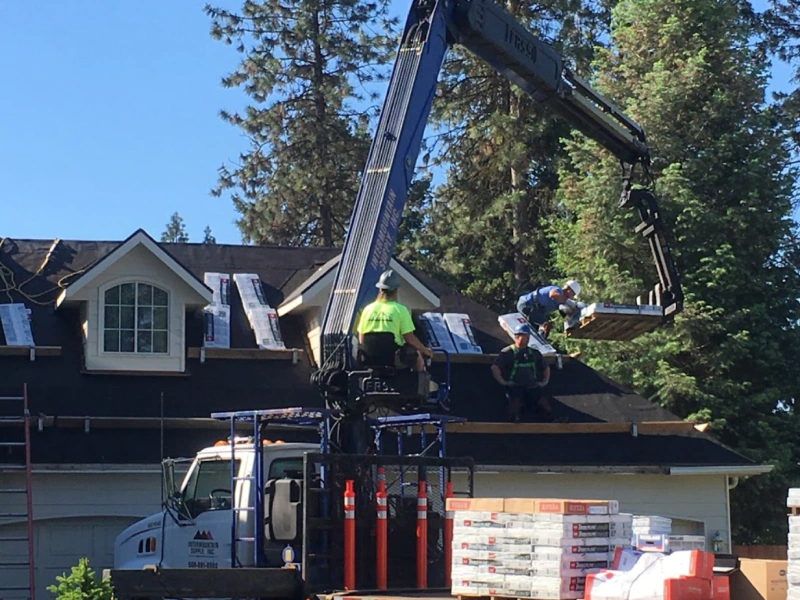
A commercial re-roof cannot shut you down, and in Chewelah it cannot wait until the snow arrives either. We schedule tear-off and dry-in so your building is never left exposed overnight, stage materials to keep your parking and entries clear for customers, and sequence the work around your hours where we can.
Because the productive roofing window in this valley is shorter than it is down in Spokane, we plan commercial projects early and book the dry months tightly. Getting on the calendar in spring or summer is how you avoid a tarp-and-pray situation come December.
A local roofer Chewelah owners can stand behind
DG Contracting LLC has been a family-run roofer in the Inland Northwest since 2013, and we hold GAF Master Elite status - a credential fewer than three percent of contractors in the country carry. We are licensed and insured in both Washington and Idaho, and our work is backed by a 15-25 year workmanship warranty plus the GAF Golden Pledge coverage on qualifying systems.
Commercial owners also tell us they appreciate the simple things: a real person answering at (509) 209-1894, free estimates with no pressure, flexible financing for larger projects, and a crew that cleans up the site like it is their own. Our 5.0 rating across nearly 300 Google reviews reflects how we treat every job, big or small.