
When to schedule an inspection
Timing is the part most homeowners get wrong. Wait until a stain shows up on the ceiling and you've likely missed months of cheaper opportunities. Put these moments on your calendar instead:
- Early fall, before the first hard freeze locks in, so weak flashing and loose shingles get handled before snow load arrives.
- Spring, once the snowpack melts off, to see what the weight and ice did along the eaves and valleys.
- After any wind or hail event that tracks up the Hwy 2 corridor.
- Before buying or selling acreage in the Riverside area, when an independent read settles the roof question fast.
- Past 15 to 20 years of roof age, when you want a baseline on remaining life.
Why an early look pays for itself
Out on the rural north Spokane County acreage, roof trouble rarely announces itself. Hail bruising hides as soft dimples in the granules, wind peels tabs along the ridge first, and ice dams park quietly at the eaves while meltwater works its way under the shingles. None of that is visible from the driveway, but all of it is catchable on the roof.
Caught early, these are a tube of sealant or a handful of replacement shingles. Left through another freeze-thaw cycle, the same spots turn into rotted decking and a tear-off. An inspection is simply the cheapest insurance you can buy on a roof.
What our inspectors actually check
We don't glance from the ground and guess. Every visit walks the full roof system and documents it with photos:
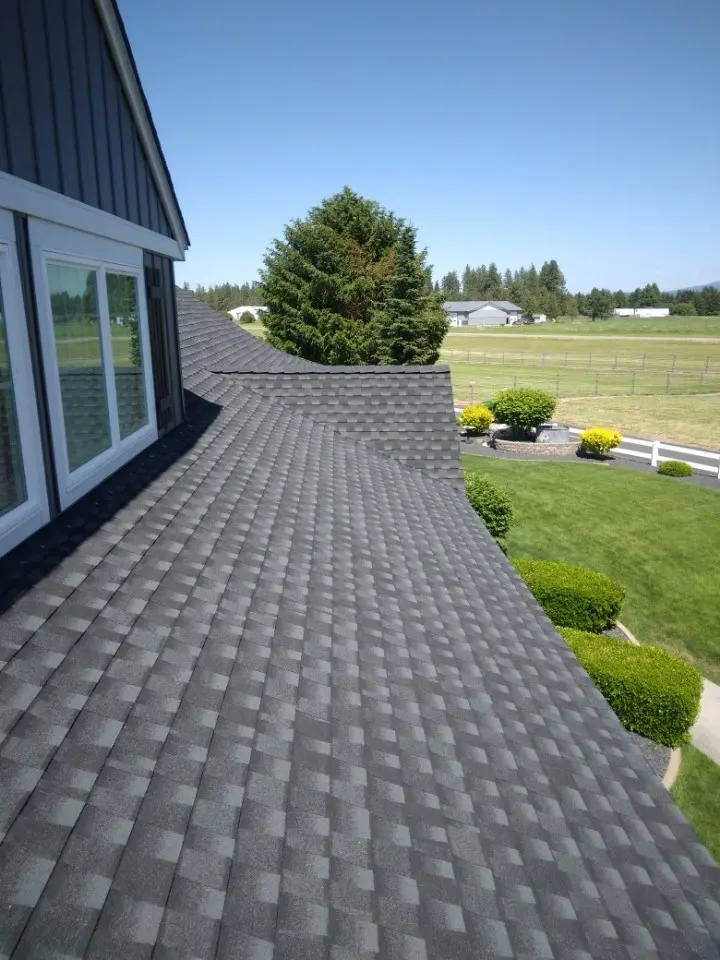
- Shingles and field: cracking, curling, blistering, granule loss, and wind-lifted tabs across each slope.
- Flashing and penetrations: chimney, plumbing boots, skylights, and wall flashing where leaks most often start.
- Valleys and eaves: the zones where snowmelt and ice dams concentrate water.
- Attic and ventilation: trapped moisture, daylight through the deck, and the intake-exhaust balance that drives ice dams.
- Gutters and drainage: sagging, separation, and runoff undercutting the fascia.
You leave with a plain-language report and a straight answer: repair it, watch it, or rest easy.
The Little Spokane River microclimate
Homes near the Little Spokane River sit in a pocket of their own. Cold air pools in the river bottoms overnight, frost lingers on north-facing slopes well into the morning, and open acreage lets wind drive snow and rain under shingle edges that would stay dry on a tighter city lot. That combination produces leaks earlier and in spots a generic inspection overlooks.
Because we work these rural roads north of Spokane every week, we know where to look first on a Chattaroy roof and what the local weather tends to break.
Storm damage and insurance documentation
When wind and hail move across the area, insurers want proof, not impressions. We photograph and document damage in the detail a claim requires, so you aren't guessing what an adjuster will accept, and we can meet your adjuster on site when that helps move things along.
We'll also tell you honestly when what you're seeing is normal wear rather than a claim. The goal of the inspection is an accurate picture, not a reason to sell you a new roof.
Why Chattaroy homeowners trust DG Contracting
We're a family-owned company founded in 2013, certified GAF Master Elite, a standing held by only the top 2 to 3 percent of roofers in the country. That certification is what lets us back installations with a 15-25 year workmanship warranty and the GAF Golden Pledge covering materials up to 50 years and labor up to 30.
Our 288 Google reviews average a perfect 5.0, and we're licensed and insured in both Washington and Idaho. If an inspection turns into a replacement, you get a 15-25 year workmanship warranty. Inspections and estimates are always free with no obligation, so call (509) 209-1894 to book yours. Curious what a full re-roof involves? See our roof replacement options.