Why elevation changes the inspection here
Green Bluff's rural elevation is the single biggest factor we account for when we climb a roof here. The extra few hundred feet over Mead and Spokane means more accumulated snow, longer-lasting drifts on north slopes, and more aggressive freeze-thaw cycling through late winter. A roof that would shrug off a Spokane winter can be quietly overloaded up here.
So our inspection starts with the things elevation punishes most: structural sag, fastener pull-through, and compression at the eaves where snow loads concentrate. We're not just looking at shingles - we're reading how the whole assembly is handling the weight it carries four or five months a year.
What we actually check on your roof
Every Green Bluff inspection covers the full system, not a glance from the driveway. We document:
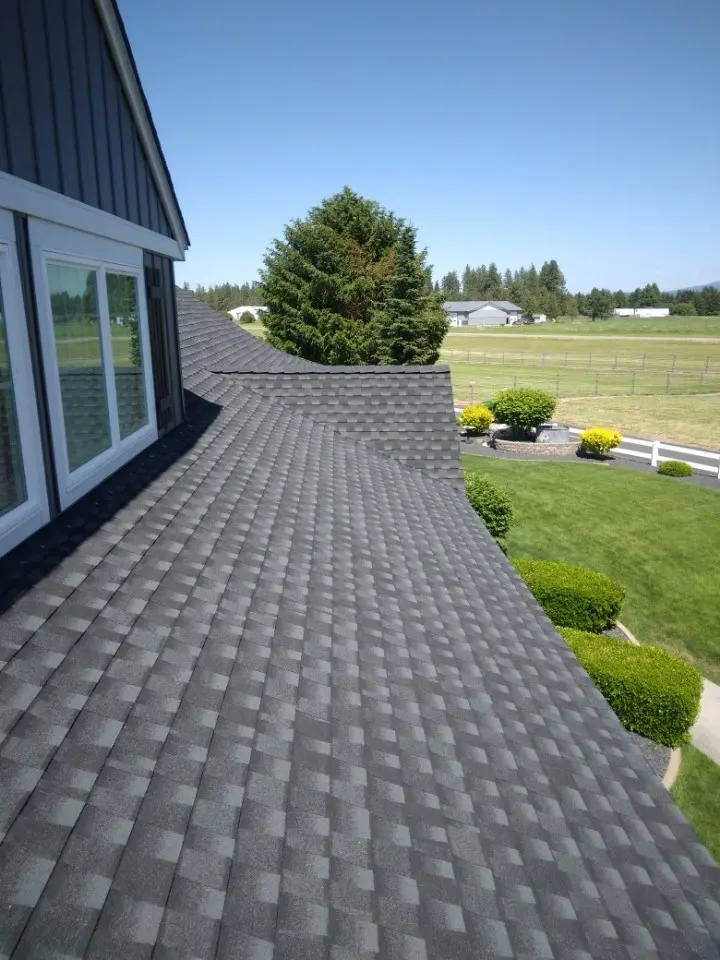
- Shingle field - granule loss, cracking, lifting, and UV wear on the exposed south and west faces
- Flashing and penetrations - chimneys, vents, skylights, and valleys where most leaks actually begin
- Eaves and ice-dam zones - staining, rot, and gutter-line damage from refreezing meltwater
- Ridge, soffit, and attic ventilation - poor airflow drives the warm-roof melting that feeds ice dams
- Underlayment and decking - soft spots and moisture intrusion visible from the attic side
You get a plain-language summary with photos, so you can see what we saw without taking our word for it.
When a Green Bluff homeowner should schedule one
Timing matters more here than in milder areas. We recommend an inspection in late fall, before the first heavy snow loads the structure, and again in early spring, once the melt reveals what winter did. If you've just bought one of the older farmhouses or outbuildings common across Green Bluff's agritourism properties, get a baseline inspection regardless of season.
Also worth a call: after any windstorm, after you notice attic staining or icicles forming along one eave, or when shingles are visibly aging but not yet leaking. Catching wear early is what keeps a repair from becoming a tear-off.
Inspecting orchard and agritourism outbuildings
Green Bluff isn't only houses. Between the U-pick orchards, farm stands, event barns, and storage buildings that draw visitors out here every harvest season, there's a lot of low-slope and metal roofing carrying serious snow. These structures often go years without anyone looking up at them.
We inspect barns, packing sheds, farm stores, and event spaces the same way we do homes - checking fastener integrity, panel seams, snow-slide patterns, and whether ventilation matches how the building is actually used. A failure on a commercial farm building during peak agritourism weekends is the kind of problem worth heading off early.
What you get from DG Contracting
Our inspections are free, and there's no obligation attached. As a GAF Master Elite contractor - a credential held by only the top 2-3% of roofers nationwide - we inspect to the standard required to back a roof with the GAF Golden Pledge warranty, whether or not you ever hire us. We're licensed and insured in both Washington and Idaho.
If the inspection turns up work worth doing, you'll get an honest assessment of what's urgent versus what can wait, plus a free written estimate. If your roof is in good shape, we'll tell you that too. Learn more about our full roof replacement services if it comes to that.
Reading the warning signs from the ground
You don't need to climb up to know it's time to call. From the ground, watch for uneven snow melt across one slope (a ventilation or insulation clue), persistent icicles on a single eave, granules collecting in gutters, or daylight visible from inside the attic. Interior signs count too - ceiling stains after a thaw, a musty attic, or doors that stick in winter from a settling roof structure.
If you're seeing any of these on a Green Bluff property, that's the moment to book an inspection rather than wait for the next storm to make the decision for you.