Why Elk roofs need a closer look than most
This corner of far north Spokane County gets weather that punishes shingles harder than the city does a half hour south. Lake-effect moisture rolls off Sacheen Lake, snow loads pile deep and linger into spring, and the freeze-thaw cycle pries at every seam and fastener. Many properties up here are seasonal cabins or older rural homes where the roof hasn't been walked in a decade.
A professional inspection catches the slow problems - lifting shingles, rusted nail heads, separating flashing - while they are still cheap to fix. We come to you, climb the roof safely, and tell you plainly what we see. No upsell, no scare tactics.
What we actually check on your roof
Our inspectors work through a full checklist on every visit, not a quick glance from the driveway:
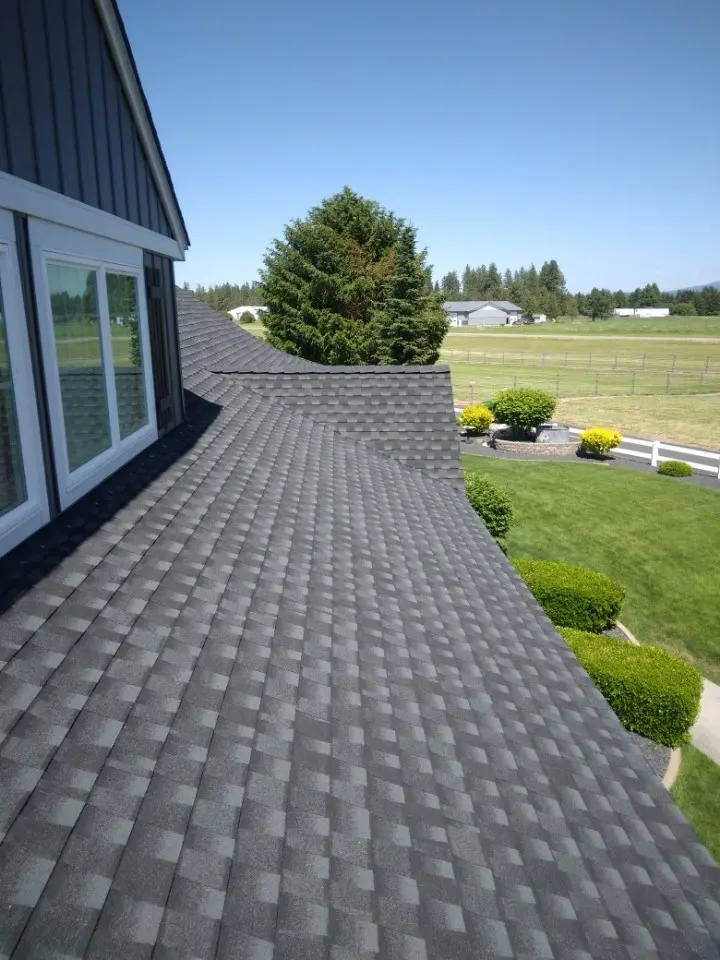
- Shingle field: granule loss, curling, cracking, blistering, and missing tabs from wind off the open ridges
- Flashing and penetrations: chimneys, plumbing boots, skylights, valleys, and step flashing where most leaks begin
- Ridge and hip caps: the high-exposure spots that wind and ice hit first
- Gutters and drainage: sagging, blockages, and pitch problems that feed ice dams
- Soffit, fascia, and eaves: rot and pest entry common on rural homes
If a section is unsafe to walk - steep cabin pitches or ice-covered slopes - we use drone footage and ladder inspection so nothing gets skipped.
The attic and ventilation story underneath
Half of what kills a roof in this climate happens out of sight. We go into the attic when access allows and look for water staining on the decking, daylight at penetrations, compressed or wet insulation, and signs of frost or condensation buildup.
Poor ventilation is the quiet culprit behind Elk's ice dams: warm air escapes into the attic, melts the underside of the snowpack, and the runoff refreezes at the cold eave. We measure intake and exhaust balance so you know whether the problem is the shingles or the airflow beneath them.
When to schedule an inspection
For remote rural homes and cabins, timing matters more than most owners realize. We recommend a roof inspection:
- After a hard winter - once the snow clears in spring, to catch ice-dam and wind damage
- Before listing or buying a property out here, so the roof's real condition is on the table
- After any wind or hail event that swept through the Hwy 2 corridor
- Every 2 to 3 years on roofs past the ten-year mark, even with no visible problem
- Before a seasonal cabin sits empty through winter, when a small leak can go unnoticed for months
If you are weighing repair against a full replacement, an inspection gives you the honest baseline. See our roof replacement options once you know where things stand.
What you get from a DG Contracting inspection
Every inspection ends with a clear written assessment - photos of what we found, the current condition, and a straight recommendation. If your roof has years left, we tell you that. If it needs attention, we explain exactly what and why, with no obligation to hire us.
As a GAF Master Elite contractor, a distinction held by only the top two to three percent of roofers nationwide, our findings carry the weight of manufacturer-backed training. Our work is licensed and insured in both Washington and Idaho, and backed by a 15-25 year workmanship warranty plus the GAF Golden Pledge with 25 and 50-year coverage when we do the work.
Local crew that knows the drive out to Elk
We are a family-owned company that has served the Inland Northwest since 2013, and we don't treat the long haul north as an inconvenience. We know the conditions around Sacheen Lake and the back roads off Hwy 2, and we show up when we say we will.
Inspections are free, estimates are free, and there is never pressure to commit. Call (509) 209-1894 to get on the schedule. If the inspection leads to a replacement, you also get a 15-25 year workmanship warranty.