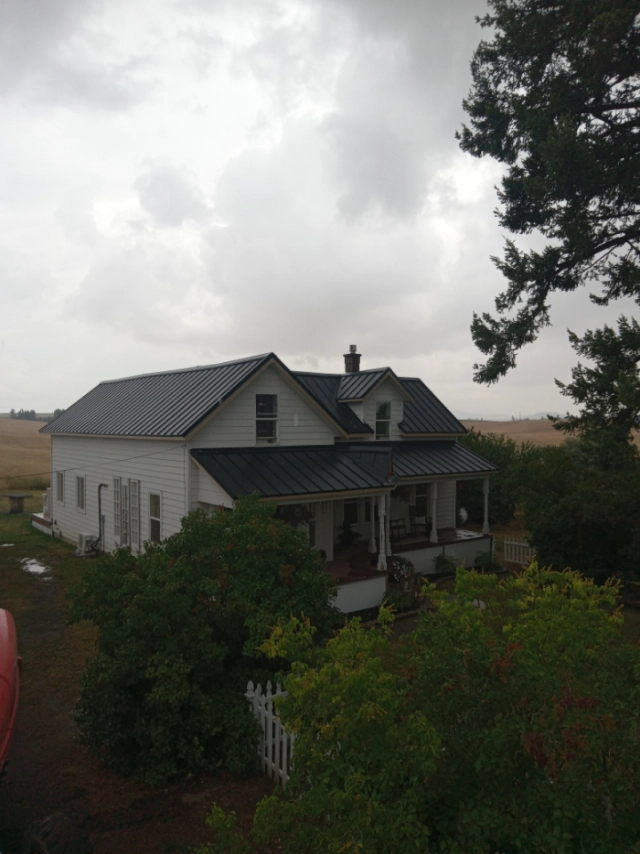
Why Lake Homes Are a Different Roofing Problem
A roof on a lake home around Coeur d'Alene, Hayden Lake, Lake Pend Oreille or Liberty Lake lives in a tougher environment than the same house would two miles inland. Open water means open exposure: there's nothing to slow the wind before it hits your ridge, gusts come off the lake harder and more often, and the freeze-thaw cycle is amplified by the humidity sitting over the water all winter.
On top of that, many lakefront properties are steep-lot homes with tall rooflines, walkout basements and lots of glass facing the water. That usually means complex roof geometry, multiple valleys, dormers and long rafter runs, plus difficult access for crews and equipment. None of that is a reason to avoid a great roof. It is a reason to plan it carefully and hire people who have actually worked on homes like yours in this region.
Wind: Your First Design Priority
Wind uplift is the single biggest reason lake-home roofs fail early. Standard three-tab shingles and bargain architectural shingles are often rated in the 60 to 110 mph range, which sounds fine until you realize a roof edge facing open water sees concentrated uplift well above the average wind speed in a storm.
For exposed waterfront sites, look at shingles rated for higher wind performance and, just as important, an installation that's engineered for wind. That means:
- Six nails per shingle instead of the minimum four on exposed slopes and edges.
- Sealed and reinforced eaves, rakes and ridges, which is where wind gets under the roof and peels it back.
- A starter strip course along all edges, not just the bottom.
The shingle brand matters less than the system. A premium architectural shingle installed to GAF specs with proper edge detailing will outperform a 'high-wind' shingle that was rushed. As a GAF Master Elite contractor, DG Contracting installs to those enhanced specs, which is also what unlocks the longer manufacturer warranty coverage.
Snow, Ice Dams and the North Idaho Winter
Lake elevations around CdA still pick up heavy, wet snow, and the humidity over the water makes ice dams a recurring problem. An ice dam forms when heat escaping the attic melts snow at the top of the roof, the water runs down to the cold eave, and it refreezes into a ridge of ice that backs water up under the shingles and into the house.
The fix is rarely the shingle itself. It's a combination of three things:
- Ice-and-water shield membrane at the eaves, valleys and around penetrations, extended well past the interior wall line for our snow loads.
- Proper attic insulation and air sealing so heat isn't melting the snowpack from below.
- Balanced ventilation (covered below) so the roof deck stays cold and even.
If you've fought ice dams every winter, the roof replacement is your chance to correct the underlying causes, not just put new shingles over the same problem.
Sun Off the Water Ages Roofs Faster
Here's something lake owners underestimate: reflected sunlight. Water bounces UV and heat back up onto the underside of eaves, soffits and the lower courses of the roof, and south- and west-facing slopes facing the lake get a double dose of solar exposure. Over years, that accelerates granule loss, drying and curling on the sun-and-water-facing planes.
You'll often see one slope of a lake home weather noticeably faster than the rest of the roof. When you replace, it's worth choosing shingles with strong UV and algae-resistance ratings, and paying attention to color: lighter and reflective colors run cooler, which helps both longevity and summer cooling costs on those big glassy lake-facing rooms.
Should You Consider Metal for a Lake Home?
Metal roofing is a genuinely strong option on the lake, and not just for looks. A standing-seam or quality metal roof sheds snow more readily, resists wind uplift extremely well when fastened correctly, won't lose granules to reflected UV, and commonly carries 40 to 50-plus year service life. For steep lake-view homes where re-roofing access is expensive and disruptive, the longer replacement cycle is a real financial argument.
The trade-offs are higher upfront cost and the need for an installer who understands snow management (snow guards, panel layout and proper underlayment) so sliding snow doesn't damage gutters, decks or anything below. If you're weighing options, our metal roofing page walks through where it makes sense, and a roof replacement estimate can compare metal against premium architectural shingles side by side for your specific home.
Ventilation, Flashing and the Details That Actually Leak
Roofs almost never fail in the middle of a clean slope. They fail at the details: valleys, chimneys, skylights, dormers, sidewall transitions and pipe penetrations. Lake homes tend to have a lot of these because of their complex, view-oriented designs.
Two things deserve special attention. First, ventilation: a balanced intake (soffit) and exhaust (ridge) system keeps the attic cold and dry in winter and exhausts heat in summer, which fights ice dams and extends shingle life. Second, flashing: every dormer, chimney and wall intersection needs proper step and counter-flashing, not a bead of caulk. On a multi-valley lake home, valley construction (woven, closed-cut or open metal) should match the snow and water volume those valleys carry.
When you get estimates, ask specifically how each contractor handles ventilation and flashing. The answers separate roofers who do lake homes well from those who treat every roof the same.
Choosing a Contractor for a Waterfront Property
Lake-home roofing is more demanding to bid, schedule and install, so the contractor matters more than usual. A few things worth confirming:
- Licensed and insured in your state. Lake homes near the state line are split between Washington and Idaho jurisdictions, so make sure the company carries proper credentials where your home actually sits. DG Contracting is licensed and insured in both WA and ID.
- Real experience with steep, complex, high-exposure roofs, not just simple tract homes.
- Manufacturer certification that backs the workmanship. Our GAF Master Elite status (held by roughly the top 2 to 3 percent of contractors nationally) supports the GAF Golden Pledge warranty alongside our own 15-25 year workmanship warranty.
- A written, itemized estimate covering tear-off, underlayment, ice-and-water coverage, ventilation and flashing, so you're comparing equal scopes.
DG Contracting is a family-owned company based in Colbert, founded in 2013, serving Coeur d'Alene, North Idaho, Spokane and Spokane Valley. We offer free estimates and flexible financing, and roof replacements include a 15-25 year workmanship warranty. If you own a lake or lakeview home, reach out for a free estimate and we'll assess the specific exposure your roof faces.