Step 1: The Free Estimate and Roof Inspection
Every replacement starts with a thorough look at what you already have. A reputable contractor climbs the roof, checks the attic, and documents the real condition of your decking, flashing, ventilation, and shingles, not just the surface. In the Inland Northwest, the inspector is paying special attention to signs of ice dam damage along eaves, freeze-thaw cracking, granule loss from hail, and soft or rotted decking near valleys and chimneys.
This is also where you talk through scope and budget. At DG Contracting, the free estimate includes a written assessment and photos so you can see exactly what we see. A good estimate spells out materials, labor, tear-off, disposal, and warranty terms, with no vague line items. If a quote feels suspiciously low, ask what is missing, often it is the underlayment, flashing, or proper ventilation.
Step 2: Choosing Materials and Getting the Details Right
Once you decide to move forward, you choose the system, not just a shingle color. For most Spokane and Coeur d'Alene homes, that means a complete GAF architectural shingle system: starter strip, water-and-ice shield at the eaves and valleys, synthetic underlayment, the shingles themselves, ridge cap, and balanced intake and exhaust ventilation.
Some homeowners opt for metal roofing, which sheds snow well and lasts decades in our climate. Whatever you choose, this is the stage to confirm color, warranty level, and any upgrades like enhanced ice protection. Because DG Contracting is a GAF Master Elite contractor, top 2 to 3 percent nationally, we can register your roof for the GAF Golden Pledge warranty, which covers both materials and workmanship for decades.
Step 3: Scheduling, Permits, and Weather Planning
Your contractor handles the permit (most municipalities in Washington and Idaho require one for a full replacement) and schedules the job around the forecast. In our region, the prime window runs from late spring through early fall, when temperatures are warm enough for shingles to seal properly but before the first hard freeze.
You will get a target start date and a rough duration. Expect some flexibility built in, an unexpected rainstorm or smoke day can push a crew back. Before the crew arrives, you will be asked to move vehicles out of the driveway, clear breakable items off walls and shelves (vibration travels), and unlock gate access so the team can reach all sides of the house.
Step 4: Site Protection and Tear-Off
On day one, the crew protects your property first. Tarps and plywood go over landscaping, decks, AC units, and windows, and a dump trailer or roll-off is positioned for debris. Then the old roof comes off, usually all the way down to the wood decking. Tearing off completely (rather than laying a second layer over the old shingles) lets the crew inspect the deck and is the only way to do the job right.
This is when hidden problems surface. If the crew finds rotted or delaminated decking, common around old skylights, chimneys, and north-facing slopes that stay damp, those sheets are replaced. A trustworthy contractor shows you the bad wood and explains the cost before swapping it, rather than burying a surprise charge in the final bill.
Step 5: Installing the Waterproofing Layers
With the deck exposed and repaired, the waterproofing system goes down. This is the part you will never see, but it is what protects your home through a Spokane winter. Ice-and-water shield, a self-sealing membrane, is applied along the eaves, in valleys, and around penetrations to defend against ice dams that form when snow melts and refreezes at the cold edge of the roof.
Over the rest of the deck goes synthetic underlayment, a tougher, lighter replacement for old felt paper. New metal drip edge is installed at the eaves and rakes, and new flashing is fitted around chimneys, vents, and walls. Reusing old, rusted flashing is a common corner-cut, on a proper job, flashing is replaced.
Step 6: Shingles, Ventilation, and Finishing the System
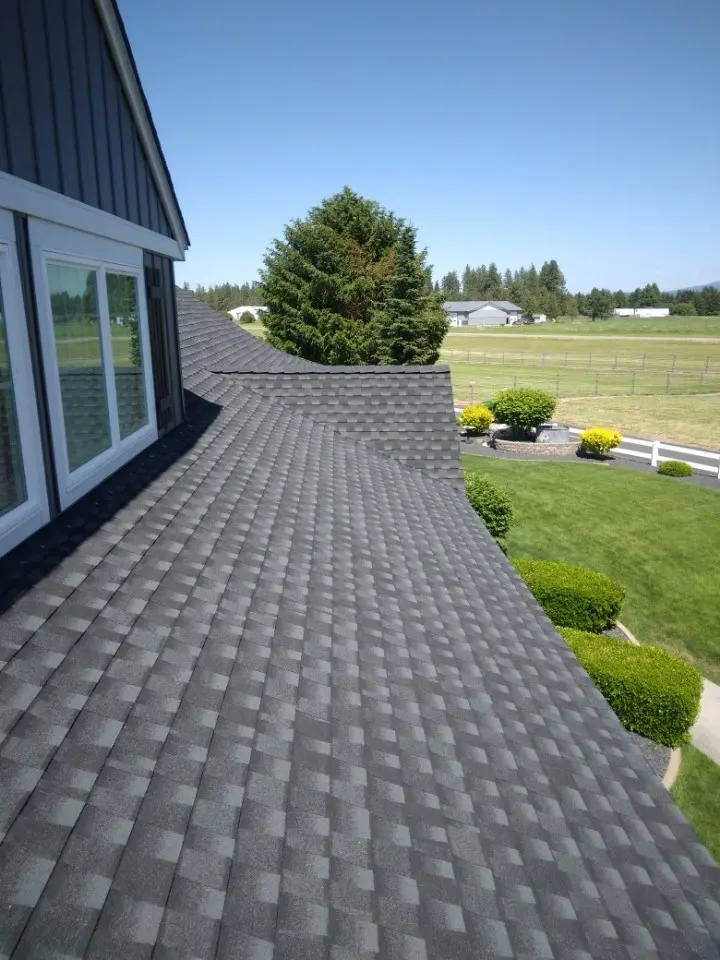
Now the visible work begins. Starter shingles are nailed along the edges, then the field shingles go up course by course, fastened to manufacturer spec (typically six nails per shingle in our wind zones, not the bare-minimum four). Valleys are woven or cut cleanly, and pipe boots and vents are sealed.
Ventilation is finalized at this stage, ridge vents at the peak paired with intake at the soffits. Proper airflow keeps your attic cool in summer and dry in winter, which directly reduces ice dams and extends shingle life. Finally, color-matched ridge cap shingles finish the peaks and hips, completing both the look and the seal of the roof.
Step 7: Cleanup, Final Inspection, and Warranty
A quality crew treats cleanup as part of the job, not an afterthought. They sweep the roof, gutters, and ground, and run a magnetic roller across the lawn and driveway to collect stray nails, an important step if you have pets or kids who play in the yard. All debris and the old roof leave in the dump trailer the same day or the next.
Then comes the final walkthrough. Your contractor (and ideally a manufacturer or third-party inspector for premium warranties) confirms the installation, and you receive your warranty paperwork. DG Contracting backs every replacement with a 15-25 year workmanship warranty on top of the GAF product coverage. If you replace your roof with us, the first a 15-25 year workmanship warranty are included free, a meaningful upgrade given how hard our snow and ice are on drainage.
How Long Does It Take, and What Does It Cost?
For a typical single-family home in the Spokane or North Idaho area, a full tear-off and replacement usually takes one to three days, depending on roof size, pitch, complexity, and weather. Larger or steeper homes, or roofs with multiple layers to remove, run longer.
Cost varies widely with square footage, material choice, and the amount of decking that needs replacing, so the only reliable number is the one in a written estimate for your specific home. Many homeowners spread the investment out with flexible financing, which makes a quality system affordable without compromising on materials. To get an accurate figure for your roof, request a free, no-pressure estimate and we will walk the roof and put everything in writing.