When you actually need an inspection
Most homeowners only think about the roof when it starts leaking, but by then the repair bill has usually doubled. A professional look once in late spring - after the snow load lifts and freeze-thaw cycles finish working at your shingles - and again in early fall before storms arrive will catch the small stuff while it is still small. Beyond that twice-a-year rhythm, here are the moments worth a call:
- After a wind event - gusts coming off the water hit exposed slopes hard and lift shingle edges.
- After heavy or wet snowfall - to check for ice-dam pressure before meltwater finds the underlayment.
- Before buying or selling - a documented condition report protects both sides of the deal.
- When warning signs appear - grit in the gutters, ceiling stains, or moss creeping across shaded sections.
Why this hilltop community is harder on roofs
Sitting up above Lake Spokane near Nine Mile, Suncrest homes face a combination of stresses that flatter neighborhoods simply do not. The wind off the water builds over open distance and slams into ridgelines along Hwy 291, working nails loose and curling tabs over the years. The heavy pine canopy that shades so many properties here brings its own trouble: needles pile up in valleys, cones and branches scour the surface, and the shade keeps north slopes damp enough to grow moss. We inspect with both of these realities in mind rather than running a one-size-fits-all checklist.
What our inspection covers, top to bottom
A DG Contracting inspection is a full-system evaluation, not a glance from the driveway. Where it is safe to walk the roof, we do, and we document everything with photos so you see exactly what we see:
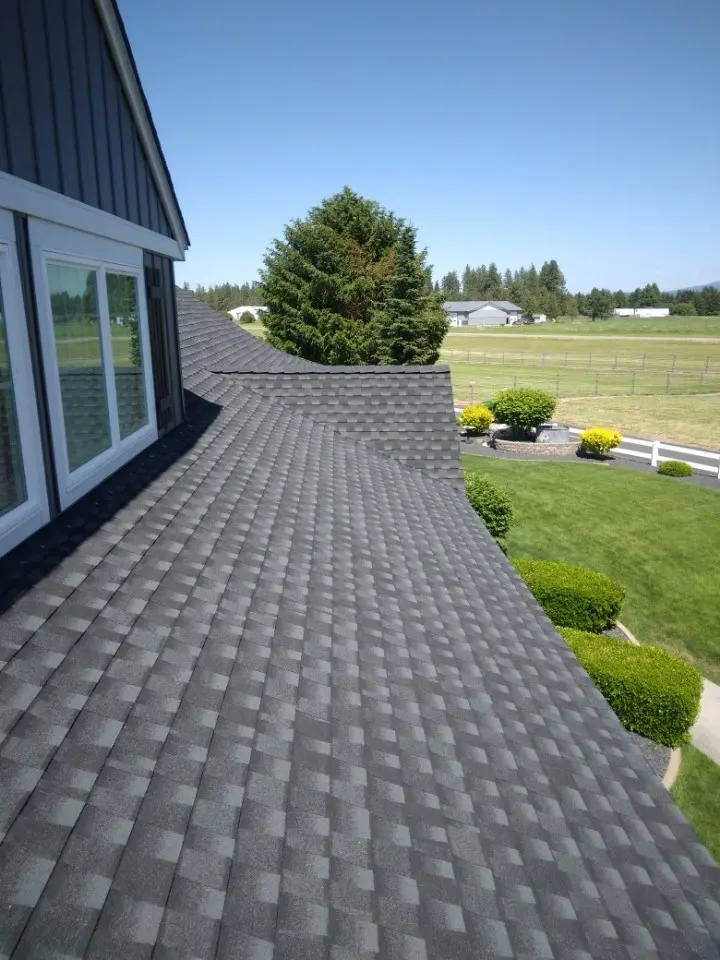
- Field shingles - granule loss, curling, cracking, and wind-lifted tabs.
- Flashing and penetrations - chimneys, vents, skylights, and valleys where leaks start first.
- Ice-dam zones - the eaves and valleys where trapped snow does the most damage.
- Attic and ventilation - trapped heat, moisture staining, or daylight through the decking.
- Gutters and drainage - pine-needle blockage and pooling that feeds ice dams.
- Decking and structure - soft spots and sag that point to deeper trouble.
Snow, ice dams, and the freeze-thaw cycle
The Inland Northwest does not make it easy on a roof. Snow piles up, partially melts against a warm deck, then refreezes at the cold eaves into ice dams that push meltwater backward under the shingles. By spring, that water has often already reached the underlayment. Our inspections specifically read the eaves, the ventilation balance, and the insulation clues that tell us whether a roof is shedding heat the way it should - so we can flag dam-prone areas before the next freeze sets in.
What you get when we are done
You walk away with a clear, photo-backed report: what is in good shape, what to keep an eye on, and what needs attention now, ranked so you can plan instead of panic. We separate real problems from cosmetic ones so you are never steered toward work you do not need. If repairs do make sense, we explain the why behind each one and lay out your options, including flexible financing and the a 15-25 year workmanship warranty that come with a full replacement. Every inspection is genuinely free and carries no obligation - reach out here to set one up.
Why Suncrest homeowners trust DG Contracting
We are a family-owned company that has served the Inland Northwest since 2013, and we hold GAF Master Elite certification, a credential carried by only the top 2 to 3 percent of roofers nationwide. That standing lets us back our work with a 15-25 year workmanship warranty and the GAF Golden Pledge, which extends coverage out to 25 and 50 years. We are licensed and insured in both Washington and Idaho, and our 5.0 rating across 303 Google reviews reflects how we treat every home up here: thorough on the roof, honest in the report. Call (509) 209-1894 for your free inspection.