
What a hailstone actually does to a shingle
Hail damage is usually quiet. A stone strikes an asphalt shingle and does two things at once. First it knocks loose the protective granules, leaving a dark, pitted spot where bare asphalt is now exposed. Second, and more seriously, the impact can bruise the shingle - fracturing the fiberglass mat underneath without breaking the surface. That bruise feels soft and spongy when you press it, like a dent in an apple. The shingle still looks intact from the curb, but its waterproofing has already been compromised.
Under the heavy tree canopy that shades much of Rockwood Blvd, this gets harder to catch. Falling leaves and limb debris mask granule loss, and a roof that merely looks dirty from the ground may quietly be losing its top layer one hit at a time.
Why granule loss matters more than it looks
Those granules are not decoration - they are the shingle's sunscreen. Once hail strips them away, the exposed asphalt begins drying out and cracking under Spokane's intense summer UV, aging the roof by years in a single season. You may see no leak at all this year, but the bruised, bare areas become the first places to fail when the next freeze-thaw cycle drives moisture into the cracks.
- Bruising: hidden mat fractures that soften the shingle and break the water seal
- Granule displacement: bare spots that age and crack prematurely
- Cracked or split shingles: direct hits that open immediate entry points
- Dented soft metal: flashing, vents, and gutters that reveal how hard the roof was hit
The inspection these estate homes deserve
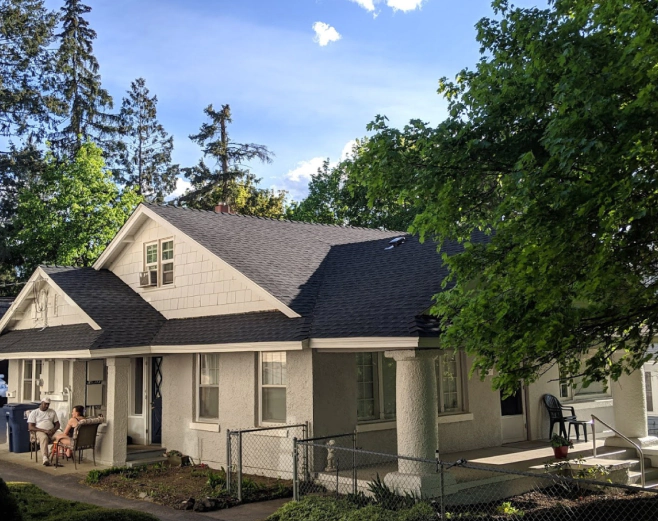
Rockwood's historic estate homes were built with steep pitches, complex valleys, and multiple roof planes, often with original detailing worth preserving. A real hail inspection here is hands-on, not a glance from the driveway. We chalk-test suspect areas to confirm whether a mark is true impact damage or just weathering, check the soft-metal surfaces where hail leaves unmistakable dents, and measure granule buildup in the gutters as evidence of how hard the storm struck.
We map every bruise and bare spot so you get a clear picture of whether you are looking at a spot repair or a larger claim. As a GAF Master Elite contractor, we know how these shingles are supposed to perform - and we can tell when hail has cut their life short.
Repairs matched to the damage we find
Not every hailstorm means a new roof. When damage is isolated, we replace the affected shingles, reseal compromised areas, and address dented flashing or vents before water finds them. When bruising and granule loss are widespread enough that the roof's remaining lifespan has been materially shortened, we will tell you that honestly, with the documentation to back it up.
Every repair carries our 15-25 year workmanship warranty and the GAF Golden Pledge, and we match color and profile so a fix on a prominent Rockwood Blvd home does not look patched. Want a fuller picture of your options? See our roof replacement guidance for Rockwood.
Acting before the Inland Northwest winter arrives
Timing matters more here than in milder climates. A bruised shingle that limps through summer may not survive the first hard freeze, when trapped moisture expands and pries the mat fracture wide open. Ice dams then form over the weakest sections, driving meltwater up under the compromised shingles. Catching hail damage in late summer or fall - before snow loads and freeze-thaw cycling set in - is the difference between a quick repair and an emergency.
We serve Rockwood and the surrounding South Hill with free estimates, and when we replace a roof we back every roof with a 15-25 year workmanship warranty. Family owned since 2013 and licensed and insured in both Washington and Idaho, we treat these landmark homes the way we would treat our own.