
What hail and wind actually do to a roof here
Indian Trail sits high and exposed on the northwest edge of Spokane, so storms that build over the Palouse and track north often hit these ridgelines with full force. Hail bruises asphalt shingles, knocking loose the protective granule layer and leaving soft spots that won't always leak right away. Wind lifts and creases tabs, breaks seals, and peels back ridge caps.
The damage that worries us most is the kind you can't see from the driveway: fractured mats under bruised shingles, displaced flashing, and loosened nails that let water track sideways during the next freeze-thaw cycle. We climb the roof, document every hit, and show you photos so you understand exactly what happened up there.
Why the newer subdivisions get hit differently
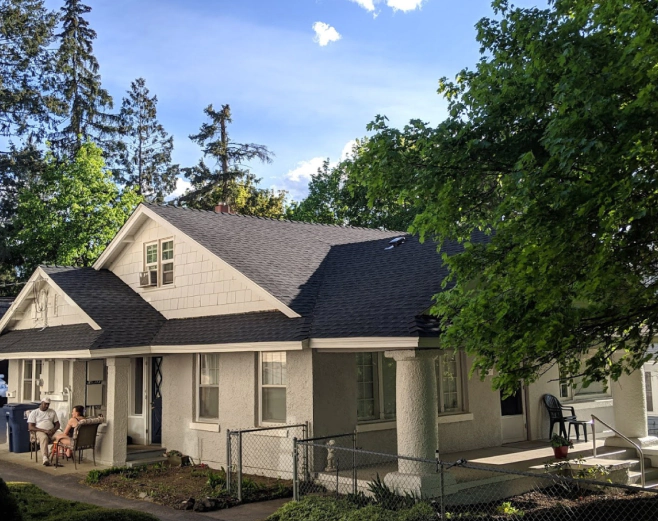
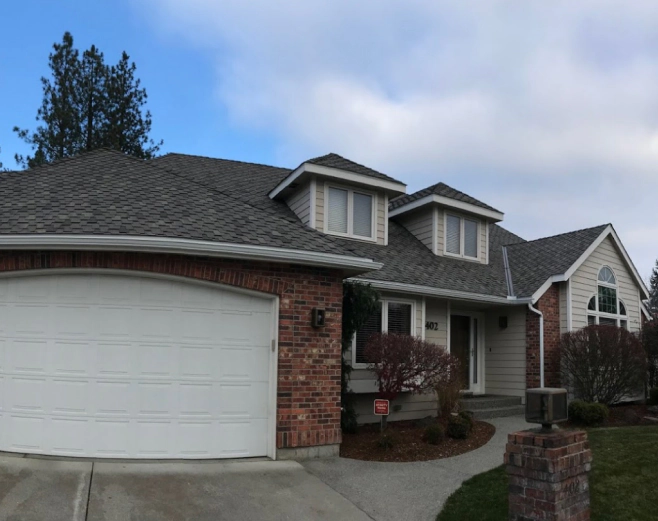
Many of the newer subdivisions spreading across Indian Trail went up with builder-grade three-tab or entry-level architectural shingles installed quickly during construction booms. Those roofs can look fine for years, then fail fast once hail compromises an already-thin granule layer.
We frequently find under-driven or over-driven nails, short nailing patterns, and skimpy flashing from the original install. After a storm, those shortcuts become entry points. Part of our inspection is checking whether what you're seeing is fresh hail damage, latent build quality, or both - because that distinction matters for your repair plan and any insurance claim.
Wooded draws and the debris problem
The wooded draws threading between Indian Trail's neighborhoods are part of the area's charm, but mature pines and firs overhanging a roof turn every windstorm into a hazard. We see punctured shingles from falling limbs, clogged valleys packed with needles that trap water, and gutters torn loose by the weight of wet debris.
- Impact punctures from branches that need sealing before the next rain
- Valley and gutter blockages that force water under shingles
- Abraded shingles where overhanging limbs rub against the surface in wind
When we repair storm damage near these tree-lined draws, we also flag the limbs and drainage issues that caused it, so the same spot doesn't fail again next season.
Our storm-response process
We keep it straightforward. First, a free, no-pressure inspection - usually within a day or two of your call, faster if there's an active leak. We photograph and measure the damage, then walk you through what we found.
If the damage warrants an insurance claim, we provide the documentation you need and can meet your adjuster on site so nothing legitimate gets overlooked. For repairs, we match your existing shingles where possible and seal everything to withstand the wind and ice that follow. When a roof is too far gone to patch responsibly, we'll tell you that honestly and lay out replacement options - including a thorough free inspection to start with a clear picture.
Repairs built for the Five Mile climate
Storm repair in this corner of Spokane has to hold up to more than one bad afternoon. Homes near Five Mile and across the Indian Trail plateau face heavy snow loads, ice dams along eaves, and the relentless freeze-thaw swing that pries open any compromised seam.
That's why we don't just slap a patch on and leave. We re-seal surrounding shingles, check the flashing and underlayment around the repair, and make sure water has a clean path to the gutters. As a GAF Master Elite contractor - a certification held by only the top 2 to 3 percent of roofers - we back our work with a 15-25 year workmanship warranty and access to the GAF Golden Pledge coverage on full replacements.
Why Indian Trail homeowners call us
DG Contracting LLC has been a family-owned roofer serving the Inland Northwest since 2013, and our reputation here is built on showing up and doing it right - a 5.0 rating across 303 Google reviews says it plainly. We're licensed and insured in both Washington and Idaho.
- Free estimates and honest assessments after any storm
- Flexible financing so urgent repairs don't have to wait
- a 15-25 year workmanship warranty with a roof replacement
- Local crews who know how Spokane's north-end weather behaves
Call (509) 209-1894 and we'll get eyes on your Indian Trail roof.