Why low-slope roofs need their own approach here
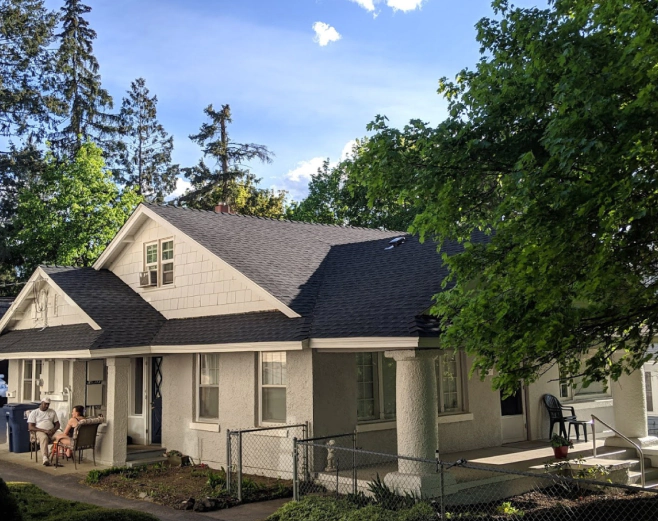
Walk a block in Comstock or near Manito Park and you'll see it: a tall, steep main roof feeding into a flat rear addition, a dormer shed, or a porch deck tucked behind a parapet. That junction is where most South Hill roofing problems start. Water moving fast off the steep pitch hits the low-slope plane and slows down, and any membrane that isn't sealed and pitched correctly will pond, then leak.
Shingles simply can't do this job. Anything under roughly a 2:12 slope needs a continuous waterproof membrane - not overlapping pieces - because there isn't enough fall to shed water by gravity alone. That's the entire reason TPO and other single-ply systems exist, and it's why we treat your flat sections as a separate engineering problem from the rest of the roof.
TPO: the workhorse for Inland NW flat roofs
TPO (thermoplastic polyolefin) is a single-ply membrane that we heat-weld at the seams, creating a bond that's effectively one continuous sheet across your roof. For South Hill weather that matters more than most homeowners realize:
- Snow load and ponding: welded seams don't rely on adhesive that fatigues under standing meltwater during a long freeze-thaw stretch.
- Reflectivity: the typical white surface bounces summer heat off, which helps on flat sections that bake all afternoon.
- Cold flexibility: the membrane stays workable in the temperature swings our winters throw at it instead of cracking.
We also fabricate flashings, parapet wraps and curb details from the same material, so penetrations and edges are welded into the field rather than caulked and hoped for.
The steep-pitch and flat-roof combination
The historic steep-pitch homes on Spokane's South Hill are gorgeous, but they create the trickiest tie-ins we handle. A 12:12 slate-look slope dumping onto a flat sun-porch roof needs a transition flashing that handles both speed and volume of runoff, plus a kickout so water doesn't track behind siding.
We detail these transitions so the steep system and the membrane work as one assembly. That usually means stepping the membrane up under the shingle course above it, building a proper saddle, and making sure the low-slope plane actually drains toward the scuppers or downspouts instead of toward the wall.
Drainage, parapets and ice dams
Flat doesn't mean level. Every low-slope roof we build gets a deliberate slope - often with tapered insulation - toward its drains. On homes near Lincoln Heights with parapet walls and internal scuppers, we make sure those outlets are sized for a heavy melt event, not just a summer rain.
Ice dams are the other South Hill reality. Where a flat section meets a heated wall, trapped meltwater can back up under a poorly terminated membrane. We address it with correct membrane height at walls, sealed terminations, and insulation that keeps the deck temperature consistent so you're not manufacturing ice at the edge.
What working with DG Contracting looks like
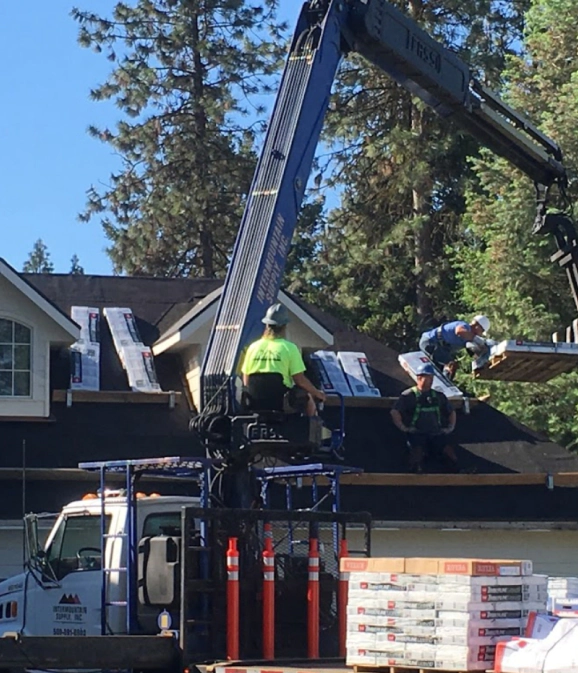
You get a free, no-pressure estimate where we actually get on the roof, check the existing deck and drainage, and tell you whether a section needs a full membrane, a repair, or a tie-in detail corrected. As a GAF Master Elite contractor - a credential held by only the top 2-3% of roofers nationwide - our installations qualify for the strongest manufacturer coverage available, and we back our own work with a 15-25 year workmanship warranty.
We're a family-owned company that has roofed the Spokane area since 2013, licensed and insured in both Washington and Idaho. If your project includes a full re-roof, ask about the a 15-25 year workmanship warranty and our flexible financing options. See how we handle full roof replacement when a flat section is only part of a larger job.
Repair, recover or replace your flat roof
Not every low-slope roof needs to come off. During the estimate we look at three honest paths:
- Repair: isolated seam failures, a punctured membrane, or a single bad flashing detail we can re-weld.
- Recover: a new membrane over a sound but aging substrate when the deck and insulation are still dry.
- Replace: a tear-off down to deck when there's trapped moisture, rot, or layered failures that recovering would only hide.
We'll show you what we find and recommend the least invasive option that will actually last through Spokane winters - not the most expensive one.