Worn flashing: the first thing to fail on an old roof
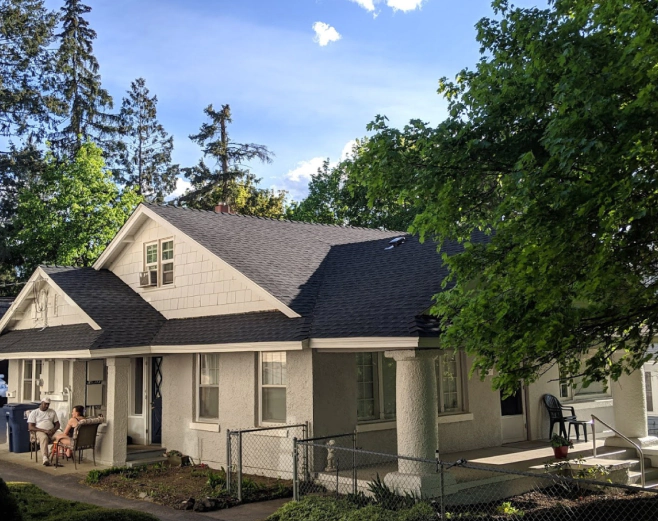
Walk the streets off Market St and you'll see rooflines that have weathered a century of Inland Northwest winters. The shingles may have been swapped once or twice over the decades, but the flashing tucked into chimneys, sidewalls, and roof-to-wall transitions is frequently older, thinner, and tired. Repeated freeze-thaw cycles work the metal loose, open the sealant joints, and let snowmelt slip into places it was never meant to reach.
On these century-old homes, we routinely find galvanized flashing rusted through, step flashing that was face-nailed instead of woven into the courses, and counter-flashing that has pulled away from masonry that shifted as the house settled. We rebuild the detail rather than smear caulk over it, so the repair actually holds through the next snow load.
Aging valleys, the seam that quietly gives out
Valleys carry the heaviest concentration of water and ice on any roof, and on the steep, multi-gable layouts common throughout the historic rail district of NE Spokane, a single home can have several. The original metal valley liners on early-1900s houses are often scoured paper-thin where generations of runoff have worn them, and the underlayment beneath has long since lost its waterproofing.
- Open metal valleys corroded or split along the centerline
- Closed-cut valleys where the shingle laps have curled and lifted
- Debris-clogged valleys that pond water and accelerate rot
- Ice-crushed valleys where repeated buildup has flattened the seam
We rebuild valleys with fresh ice-and-water membrane and properly sized metal so the busiest part of your roof stops being the weakest.
What roof repair on a historic home really involves
Fixing a leak on a 1910 house is rarely as simple as it looks from the curb. The decking may be true-dimension lumber, the framing has often settled, and previous owners frequently layered on a patchwork of materials. We begin with a full inspection that traces the water to its real entry point, then scope a repair that respects the existing structure.
Typical repairs we handle in Hillyard include re-flashing chimneys and dormers, replacing damaged decking, addressing nail pops, swapping cracked or wind-lifted shingles, and rebuilding pipe boots and vents. When we replace materials, we match the look so the repair blends into the original roofline. Learn more about our full range of roof replacement options if a repair turns out not to be enough.
Built for Inland Northwest weather
Hillyard's older roofs take a beating that newer construction in milder climates never sees. Heavy snow piles up and lingers, freeze-thaw cycles pry at every seam, ice dams form along the eaves, and summer wind and hail finish what winter started. A repair that ignores these forces will simply fail again by the next thaw.
As a GAF Master Elite contractor, a distinction held by only the top 2 to 3 percent of roofers nationwide, we install repairs with the same cold-climate detailing we'd bring to a full replacement: ice-and-water shield in the vulnerable zones, correct fastener patterns, and flashing laps that shed water instead of trapping it.
Why Hillyard homeowners call DG Contracting
We're a family-owned company founded in 2013 and based just up the road in Colbert, so we know these neighborhoods and the way their roofs age. Our work is backed by a 15-25 year workmanship warranty, and when a repair turns into a replacement, the GAF Golden Pledge covers you for 25 to 50 years.
- 5.0 rating across 303 Google reviews
- Licensed and insured in both Washington and Idaho
- Free, no-pressure estimates with honest repair-versus-replace advice
- Flexible financing, plus a 15-25 year workmanship warranty with a full replacement
Call (509) 209-1894 to schedule a free estimate.