
When an Inspection Pays Off
Timing matters more than most homeowners realize. Up on the Five Mile Prairie bluff in north Spokane, the calendar gives you two clear windows. A spring inspection tells you what the winter actually did - whether ice dams pried up flashing, whether a hard freeze cracked a seal, whether wind worked a few shingles loose. A fall inspection makes sure everything is buttoned up before snow sits on the roof for months.
Beyond the seasonal rhythm, certain events should prompt a call regardless of the date:
- After any windstorm with gusts strong enough to scatter branches
- Following hail, even when the stones looked small
- When you spot a stain spreading on a ceiling or in the attic
- Before you buy or sell a home on the plateau
- When a roof passes the 12 to 15 year mark and you have no recent records
Why the Plateau Is Hard on Roofs
The wind-exposed plateau sits high and open, which is exactly why it gets hit harder than sheltered neighborhoods down in the valley. Wind that has nothing to slow it down lifts shingle edges and drives rain sideways under courses that would shed water fine in calmer spots. Add the Inland Northwest pattern of heavy snow, repeated freeze-thaw, and ice dams forming along eaves, and you have a recipe for slow, hidden damage.
That combination is what we look for first. A roof can appear perfectly fine from the street and still have lifted nails, compromised flashing, or saturated decking where meltwater backed up under the shingles.
What We Actually Check
A real inspection goes well past a glance from the driveway. On every visit we work through the full system:
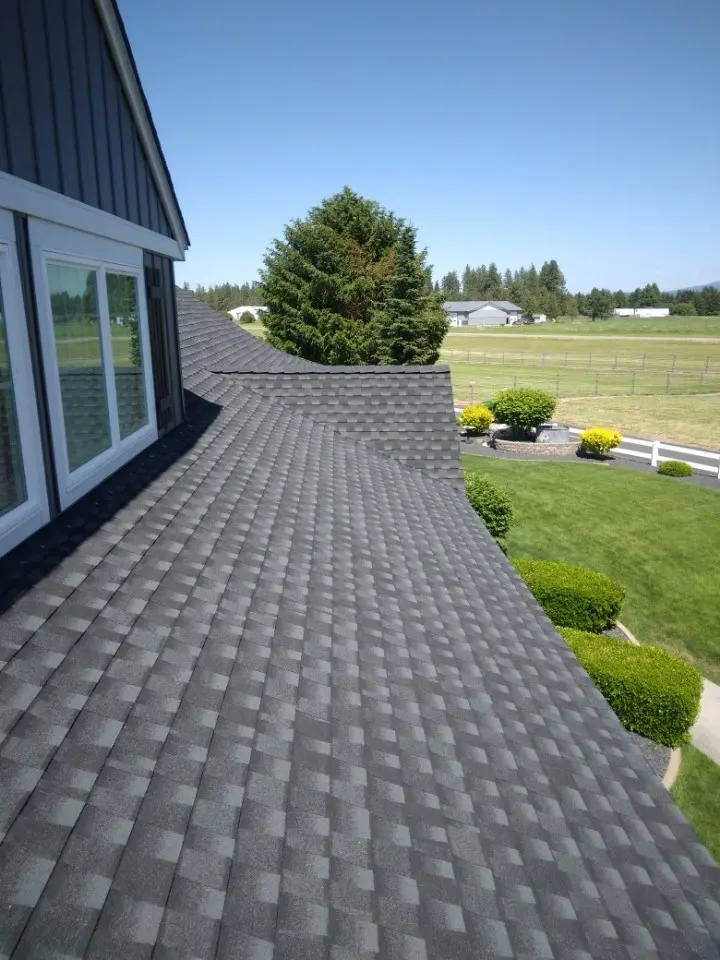
- Shingles and field: granule loss, cracking, lifted or missing pieces, wind creasing
- Flashing and penetrations: chimneys, vents, valleys, and skylights - the spots that leak first
- Eaves and ice-dam zones: evidence of backup, rot, or damaged underlayment
- Attic and ventilation: moisture, daylight, insulation gaps, and airflow that drives ice dams
- Gutters and drainage: whether water is leaving the roof the way it should
You get a plain-language report with photos, not a sales pitch. If the roof is sound, we tell you so and note what to watch next season.
Built for Newer Homes Too
The newer homes near Indian Trail and across the prairie are not exempt. Builder-grade roofs and recent installs can carry small workmanship issues - a short nail, a missed flashing detail, a ventilation shortfall - that only reveal themselves after a couple of hard winters. An early inspection catches these while they are still warranty-relevant and cheap to fix.
For older homes, an honest inspection answers the bigger question: does this roof have years left in it, or is it time to plan a replacement before the next big storm forces the issue?
Inspect, Then Plan With Confidence
An inspection is only useful if it leads to a clear next step. When repairs make sense, we scope them precisely so you are not paying for a full tear-off you do not need. When a roof is near the end, we lay out replacement options backed by our 15-25 year workmanship warranty and the GAF Golden Pledge covering 25 to 50 years.
As a GAF Master Elite contractor - a standing held by only the top 2 to 3 percent of roofers nationwide - and a family-owned company working the Inland Northwest since 2013, we stake our reputation on telling you the truth about your roof. See our full roof replacement options in Five Mile Prairie if an inspection points that direction. Estimates are always free, and we are licensed and insured in both Washington and Idaho.